Corneal shape and stability
Topography and tomography assess whether the cornea has irregular patterns that increase the risk of ectasia. Thickness matters, but shape matters more.
A practical, evidence oriented overview of LASIK and PRK: what changes, how candidacy is judged, and what outcomes and tradeoffs are realistic.
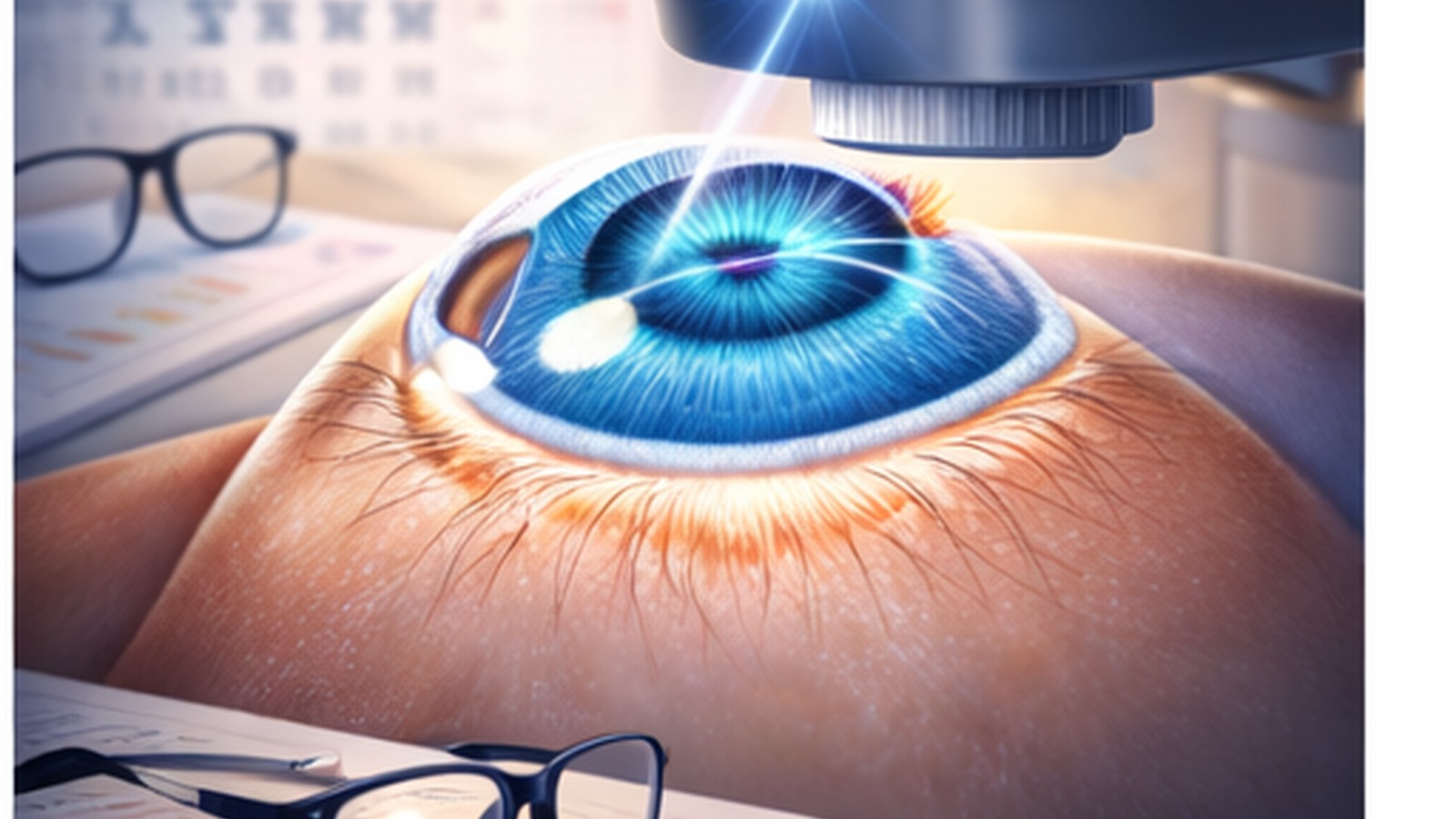
Both procedures reshape the cornea to change the eye’s focusing power.
LASIK and PRK are corneal refractive procedures. They change the curvature of the cornea so that light focuses closer to the retina without relying on glasses or contacts. The procedure does not strengthen the eye. It changes optical geometry. That distinction matters because most long term questions are really about optical stability, surface comfort, and what happens as the natural lens ages.
The same laser technology can be used with different access methods. LASIK creates a thin corneal flap, reshapes the underlying tissue, then repositions the flap. PRK removes the surface epithelium, reshapes the front stroma, then the epithelium regrows. The optical goal is similar. The recovery profile is not.
Most of the safety and quality outcomes are decided before the procedure.
Screening is risk management. It answers whether your cornea can tolerate reshaping while remaining biomechanically stable, whether the surface is likely to stay comfortable, and whether the refractive goal is realistic. A strong screening visit is usually the difference between a predictable result and a disappointing one.
Topography and tomography assess whether the cornea has irregular patterns that increase the risk of ectasia. Thickness matters, but shape matters more.
Higher prescriptions are possible, but the tradeoff set changes. The goal is not "can it be done" but "what quality is likely for your measurements."
Dry eye tendency is one of the most common drivers of postoperative dissatisfaction. Tear stability affects clarity and comfort.
Same concept, different access method, different recovery curve.
LASIK often has faster functional recovery because the epithelium remains largely intact and the flap is repositioned immediately. PRK avoids a flap and preserves more corneal biomechanics for some candidates, but the surface must regrow. That can mean several days of discomfort and a longer stabilization period for sharpness and night vision quality.
Good outcomes are common, but the definition of "good" varies by person and by task.
Many patients can achieve good uncorrected distance vision. The more nuanced outcomes involve contrast and night driving, glare and halos, and whether vision feels stable across long days. It is possible to read the eye chart and still feel that vision is not crisp. That complaint often traces back to tear film instability or residual aberrations that matter more in low light.
Another predictable reality is presbyopia. Even with excellent distance correction, most people will need near correction with age because the natural lens loses focusing flexibility. This is not a failure of the procedure. It is normal lens aging.
Risks are not only rare disasters. Many are quality tradeoffs.
Dryness can be temporary or persistent. It affects comfort and can cause fluctuating blur. Baseline surface health predicts this risk.
Glare, halos, and starbursts can occur, especially in low light and with larger pupils. Many cases improve over time, but not all.
Some prescriptions drift over time. Enhancements are sometimes possible, but they depend on corneal thickness and surface status.
These focus on your measurements and your tasks, not generic claims.